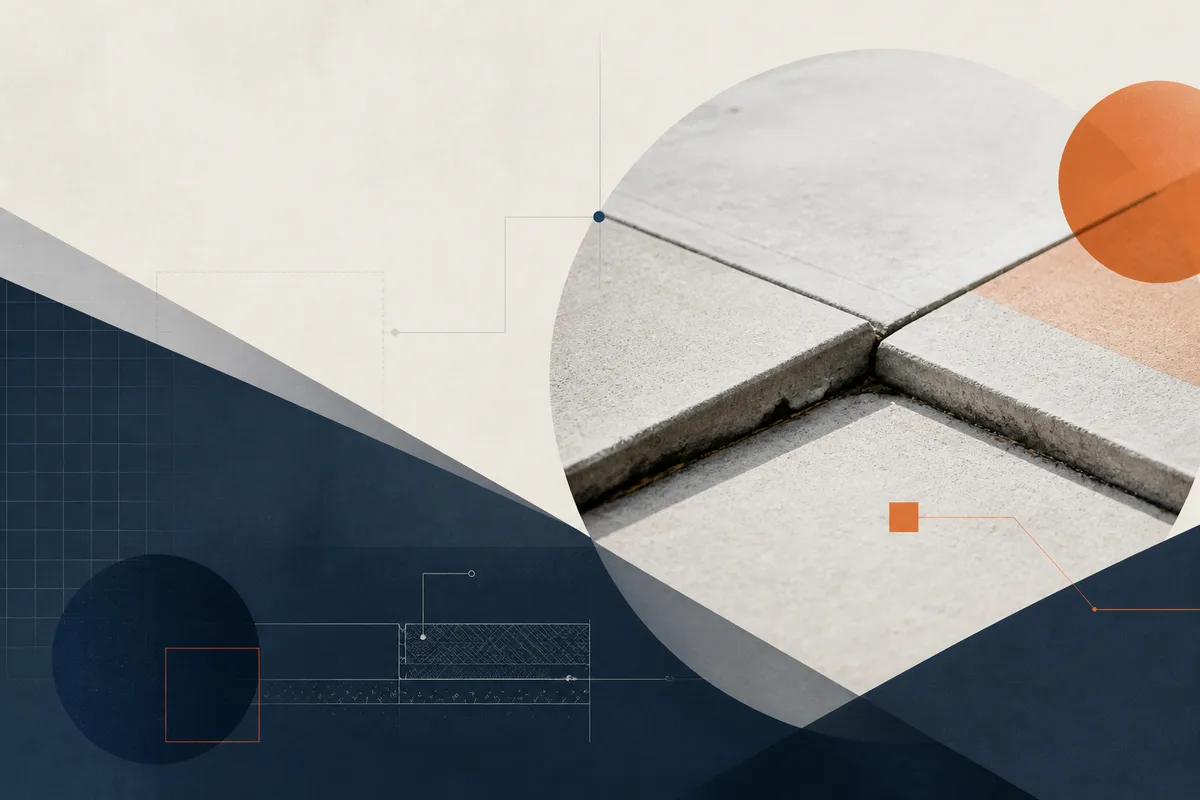
Managing Sidewalk Trip Hazards: Liability and Technical Repair Standards
In this region, a shift in a concrete slab of less than an inch can transform a standard walkway into a significant legal liability. Most property owners mistake cosmetic cracks for the primary threat, but the real risk lies in vertical displacement—where one section of concrete rises or sinks independently of its neighbor. When these transitions become abrupt, they fail to meet basic safety expectations and create avoidable hazards for pedestrians.
This guide outlines the technical requirements for addressing concrete sidewalk trip hazards and the maintenance responsibilities faced by property owners. According to safesidewalks.com, a sidewalk trip hazard is any vertical change of 1/4 inch or more at any joint or crack. Understanding these standards helps prioritize repairs before a minor displacement necessitates a total tear-out or results in a liability claim.
Why Sidewalk Maintenance Often Fails
Small gaps in concrete are rarely static; they are the visible symptoms of active ground movement or drainage failures. Property owners often overlook these early warning signs because the concrete appears structurally sound despite the displacement.
- Neglecting small cracks allows water to pool and seep beneath the slab, which can weaken the supporting soil.
- Relying on temporary "patch" kits often creates a secondary trip hazard when the thin material chips away under foot traffic.
- Ignoring tree root growth leads to upward pressure that can snap a slab, making simple grinding repairs impossible.
- Overlooking maintenance can lead to official notices or increased liability risks if the sidewalk is deemed defective.
The Framework for Addressing Vertical Displacement
Addressing a trip hazard requires more than just smoothing an edge. It involves stabilizing the environment around the concrete to ensure the repair lasts longer than a single season.
1Establish the Displacement Height
The standard for identifying a hazard is a vertical gap. A height difference of 1/4 inch or more is considered a trip hazard that should be mitigated to ensure pedestrian safety safesidewalks.com. Measuring the peak of the rise determines whether the concrete can be salvaged through grinding or requires lifting.
2Identify the Root Cause
Before applying any material, it must be determined if the slab is still moving. If a nearby tree is lifting the concrete, the hazard will return unless the roots are addressed. If the cause is soil compaction or erosion, the sub-base may need stabilization.
3Select the Mitigation Method
Minor lips are often corrected through concrete grinding or precision saw cutting, which tapers the high side down to meet the low side propertymanagementpleasanton.com. For sunken but intact panels, lifting the panel may be an option hammer-construction.com. Additionally, driveway resurfacing techniques can be adapted to walkways to bridge small gaps and provide a uniform, slip-resistant finish.
4Verify Safety Compliance
For any repair to be considered successful, it must result in a transition that is safe for all users, including those with mobility aids. Professional grinding and saw cutting are preferred because they quickly eliminate height discrepancies that lead to liability claims propertymanagementpleasanton.com.
Understanding Property Owner Sidewalk Maintenance Liability
Uneven sidewalks expose property owners to liability claims youtube.com. This responsibility generally includes ensuring the path is clear of obstructions and that the concrete itself does not pose a danger to the public. For rental properties, landlords have a specific duty to address these hazards to protect tenants and visitors propertymanagementpleasanton.com.
Proactive maintenance—such as sealing cracks early and addressing small vertical shifts—is significantly more cost-effective than responding to a personal injury lawsuit. Repairing a concrete sidewalk involves assessing the damage, preparing the area, and choosing the right repair method to ensure a level surface facebook.com.
How Sacramento Concrete Resurfacing Helps
Professional concrete repair involves a detailed assessment of the slab's integrity to determine if it can support a new surface. A typical scope of work for fixing concrete sidewalk trip hazards includes cleaning the existing substrate, grinding down high points, and applying high-strength overlays that bond to the original slab. For residents in the Elk Grove service area and surrounding neighborhoods, this approach avoids the disruption of heavy demolition. Owners should have information ready regarding the age of the concrete and the presence of nearby large trees when requesting an evaluation. For a formal assessment of a walkway or patio in Sacramento, property owners can call (916) 908-0547 or submit a request through the online form.
Frequently asked questions
Who is responsible for sidewalk repairs?
Property owners are generally responsible for maintaining the sidewalk fronting their property in a safe condition. Failure to address known trip hazards can lead to significant liability if a pedestrian is injured davis-stirling.com.
What is the 1/4 inch rule for trip hazards?
According to industry safety guides, any vertical change of 1/4 inch or more at any joint or crack is considered a trip hazard that requires repair to minimize liability safesidewalks.com.
Can I just put a layer of cement over the trip hazard?
Applying a thin layer of standard cement usually fails because it lacks the bonding agents necessary to stick to old concrete. Repairing a sidewalk correctly involves assessing the damage and preparing the area properly to ensure the new material adheres facebook.com.
Does homeowners insurance cover sidewalk trip hazard repairs?
Standard policies typically do not cover maintenance or wear-and-tear repairs. However, maintaining the sidewalk is a key part of risk management to protect against potential liability claims resulting from uneven concrete youtube.com.
How long does a typical sidewalk resurfacing take?
Most residential walkway repairs can be completed in one to two days, depending on the extent of the displacement and the weather. Resurfacing requires the concrete to be dry and at a moderate temperature to ensure the new overlay bonds correctly to the original surface.
What happens when you get in touch: you describe the situation, we ask the few questions that actually change the answer, and you get a clear scope and next step — no obligation.