The Concrete Sound Test: How to Diagnose Structural Failure vs. Cosmetic Spalling
Homeowners often mistake surface scaling for a total slab failure, leading to unnecessary and expensive demolition. In the Sacramento climate, where heat expansion and occasional frost cycles stress the material, the difference between a cosmetic eyesore and a structural liability comes down to the bond between the concrete layers. If the core of the slab is intact, a high-strength overlay can restore the finish for a fraction of the cost of a new pour.
This guide provides a technical checklist for diagnosing concrete health using the hammer-tap and chain-drag methods. By identifying "hollow" zones, property owners can determine if they should invest in driveway resurfacing or prepare for a full tear-out. Whether you are managing an aging patio in Elk Grove or a stained garage floor, these steps define the path forward.
Why Visual Inspections Often Mislead Homeowners
A slab can look catastrophic due to salt damage or poor finishing while remaining structurally sound. Conversely, a smooth surface can hide significant voids that will eventually lead to a collapse under vehicle weight.
- Spalling usually affects only the top 1/8 to 1/4 inch of the concrete, leaving the structural integrity of the slab untouched.
- Cracks that are narrower than a quarter-inch and do not show vertical displacement are usually shrinkage-related rather than structural.
- Discoloration and "dusting" are often chemical issues related to the mix design or curing process, not signs of a failing foundation.
- The presence of a hollow sound indicates that air or water has compromised the bond, which is the primary indicator for replacement.
The Concrete Resurfacing vs Replacement Checklist
Identifying the health of your concrete requires moving beyond a visual check and performing a physical acoustic test.
1Perform the Acoustic Chain-Drag Test
For large areas like driveways, drag a heavy steel chain across the surface and listen for a shift in pitch. A clear, ringing metallic sound indicates a solid, well-bonded slab, while a dull "thud" or "hollow" echo suggests delamination. According to the U.S. Bureau of Reclamation, this method is effective for locating delaminations near the reinforcement bars or between lift layers.
2Conduct a Hammer-Tap on Isolated Cracks
For smaller areas or specific cracks, use a mason’s hammer to tap the concrete every six inches along the fissure. If the sound remains sharp and consistent, the crack is likely localized and can be bridged with an epoxy or polymer filler. If the sound becomes hollow as you approach the crack, the surrounding concrete has lost its grip on the substrate.
3Measure Vertical Displacement
Check if one side of a crack is higher than the other, known as "faulting." If the displacement exceeds a half-inch, it usually indicates a subgrade failure or soil erosion that resurfacing cannot fix. The Federal Highway Administration notes that full-depth repairs are necessary when structural integrity is lost to ensure long-term load transfer.
4Evaluate the Total Surface Damage Area
Calculate the percentage of the slab that is currently scaling, spalling, or producing a hollow sound. Industry standards generally suggest that if more than 20-25% of the total surface area requires deep structural repair, a full replacement becomes more cost-effective than extensive patching.
The Mechanics of Delamination
Delamination occurs when the top layer of the concrete separates from the main body of the slab. This is frequently caused by "blisters" formed during the finishing process, where air or bleed water is trapped under a prematurely sealed surface. Over time, traffic and weather cause this thin shell to crack and flake away, exposing the aggregate underneath.
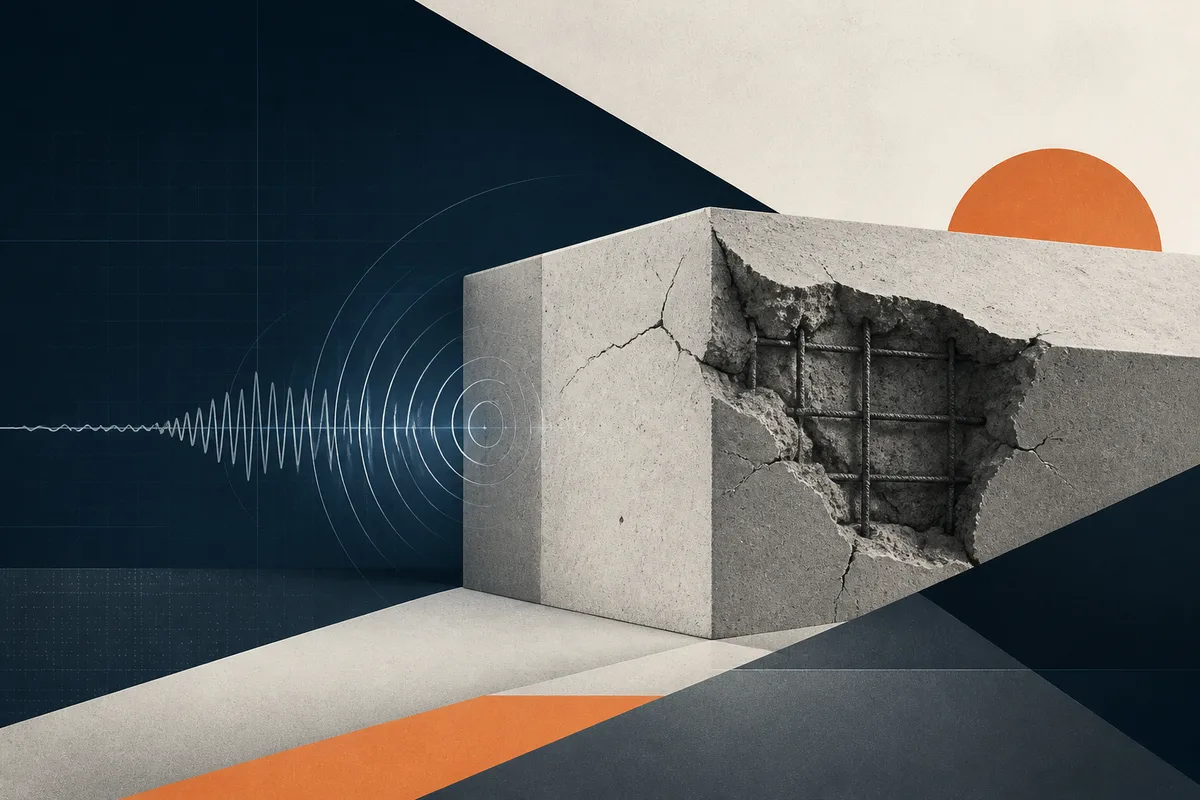
The shift from a high-frequency ring to a low-frequency thud, signifying a subsurface air pocket or bond failure.
When these voids are localized, the loose material can be mechanically removed and the slab can be restored using specialized services. However, if the hollow sounds are pervasive across the entire driveway, it indicates the original pour was fundamentally flawed, and any overlay applied on top will eventually fail along with the base layer.
How Sacramento Concrete Resurfacing Helps
Determining the viability of a slab requires an objective assessment of the substrate's compressive strength and bond integrity. A typical professional evaluation involves cleaning the surface to expose the true extent of cracking and performing a thorough sounding of the entire perimeter. For property owners in the Sacramento area, it is important to note that while cosmetic overlays usually do not require a permit, a full replacement involving structural changes or new footprints may require one through the City of Sacramento Building Department. A sound scope of work should always include mechanical grinding to reach "sound" concrete before any new material is applied. If you need a technical assessment of your slab, you can call (916) 908-0547 to discuss the specific conditions of your property.
Frequently asked questions
Does a hollow sound always mean I have to replace the concrete?
Not necessarily, but it does mean that specific section must be removed. If the hollow area is small and localized, a contractor can saw-cut the failed section, pour a deep-patch repair, and then resurface the entire slab for a uniform look. If the hollow sound is heard across the majority of the slab, the bond has failed globally and replacement is the only permanent solution.
How do I know if a crack is structural or cosmetic?
A cosmetic crack is typically a fine hairline fracture caused by the concrete shrinking as it dries. A structural crack is one that runs all the way through the slab, is wider than a quarter-inch, or has one side sinking lower than the other. Structural cracks often indicate that the ground beneath the concrete has shifted or eroded.
Can I resurface concrete that is already crumbling?
Resurfacing requires a solid foundation; you cannot bond new material to loose, crumbling debris. All "punky" or soft concrete must be chipped away until you hit hard, unweathered material. If you have to remove more than an inch of the surface across the entire slab to find solid ground, a full replacement is usually more practical.
Does the Sacramento heat affect how I should test my concrete?
High temperatures can cause concrete to expand, which might temporarily "close" cracks or change the pitch of an acoustic test. It is best to perform a chain-drag test in the morning when the slab is cool. This provides a more accurate representation of the gaps between the layers before thermal expansion tightens the joints.
What happens if I ignore the hollow sounds and just seal the cracks?
Sealing the cracks will prevent water from entering for a short time, but it does not fix the underlying delamination. The loose upper shell will continue to move under the weight of vehicles or foot traffic. Eventually, this movement will break the seal, leading to larger potholes and a more expensive repair down the road.
Is a permit required for resurfacing in Sacramento County?
Generally, a permit is not required for a simple resurfacing or decorative overlay on an existing footprint, as it is considered maintenance. However, if the "diagnosis" leads to a full replacement that involves changing the dimensions of a driveway or altering drainage, you should check with local building authorities to ensure compliance with local codes.
What happens when you get in touch: you describe the situation, we ask the few questions that actually change the answer, and you get a clear scope and next step — no obligation.